



Minnesota homeowners often notice cracks forming in their driveways and quickly search for an inexpensive fix. Store-bought fillers promise fast, easy asphalt crack repair, but do they provide lasting results? In Minnesota’s freeze-thaw climate, cracks rarely stay surface-deep for long. Moisture infiltration expands during winter, widening cracks and weakening the driveway base. Before choosing DIY solutions, homeowners should understand how cracks form and what determines whether repairs actually last.
Below, we break down how store-bought crack fillers compare to professional repair methods, when DIY solutions are reasonable, and when asphalt damage requires qualified contractor intervention.
Why Cracks Form and Spread in Minnesota Asphalt Surfaces
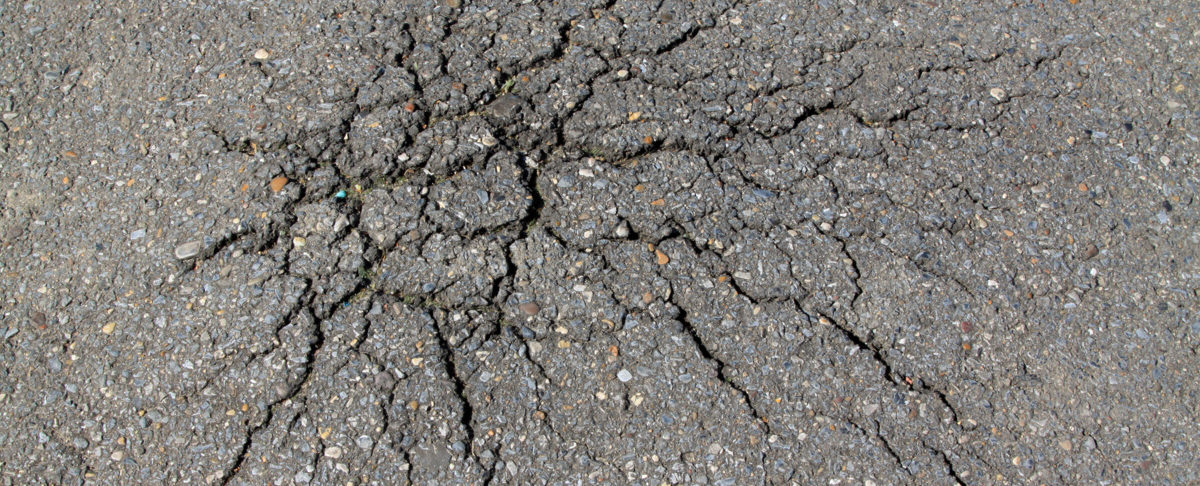
Cracks form for many reasons, but Minnesota’s weather accelerates deterioration more aggressively than moderate climates. Asphalt surfaces are in a constant state of expansion and contraction due to our extreme seasonal temperature swings. When moisture penetrates these openings and undergoes the freeze-thaw cycle, the resulting pressure builds beneath the surface, forcing cracks wider. Subgrade instability and settlement further complicate this by causing reflective cracking that migrates upward through the pavement.
While homeowners often turn to DIY solutions to stop this spread, the performance data is sobering. Store-bought cold-pour fillers last only 10 to 16 months before falling below 80% effectiveness. In a climate like Minnesota’s, this means a DIY fix may not even survive a single winter. Once these fillers fail, moisture can enter unrestrictedly, and vehicle weight amplifies stress points. What starts as a hairline fracture quickly develops into network cracking, raveling, potholes, or total base failure.
Store-Bought Filler Products vs. Professional Repair Methods
Retail crack fillers are appealing because they are inexpensive and accessible at hardware stores. However, performance expectations must be realistic. Materials sold for homeowner use provide temporary surface sealing, not structural reinforcement. Most are latex- or rubber-based mixes intended for shallow surface cracking.
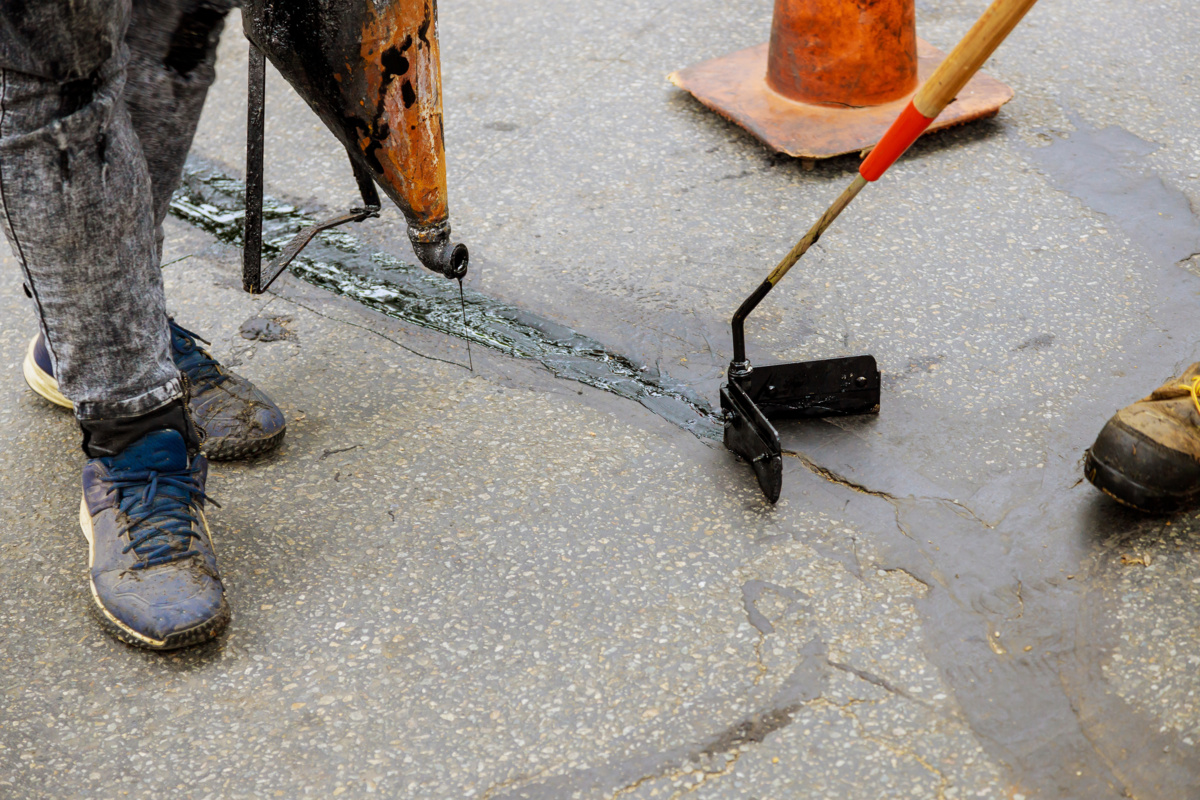
Professional crews use industrial-grade rubberized crack sealants and hot-pour materials engineered to expand and bond more effectively. These sealants resist movement and prevent moisture infiltration far more reliably than consumer-grade products. In addition, professional repair includes cleaning, routing, heating, and compaction steps not possible with simple pour-and-go fillers. Store-bought fillers may slow deterioration temporarily, but rarely correct underlying causes or prevent future cracking.
Does DIY Asphalt Repair Make Sense?
DIY asphalt repair can be cost-effective when cracks are shallow and surface-level. Hairline cracks or narrow cosmetic cracking may benefit from temporary sealing to prevent moisture from entering the base.
Common conditions where DIY can work include:
- Shallow cracks that appear after the first freeze cycle
- Cosmetic surface separation not linked to subgrade movement
- Cracks that are isolated to low-traffic areas
- Minor settling where structural support remains intact
These temporary fixes can help protect the driveway until professional maintenance is scheduled. DIY asphalt repair is not always harmful; it just needs realistic expectations based on crack severity and long-term goals.
When to Avoid DIY and Call a Contractor
Some cracks indicate deeper failures beneath the surface. Attempting DIY on asphalt driveways may worsen the issue or delay necessary professional intervention.
Contractor involvement is recommended when cracks:
- Appear in a spreading pattern or spider web
- Reach deeper than ¼ inch
- Resurface after previous sealing attempts
- Have accompanying potholes, rutting, or heaving
- Allow visible moisture intrusion
Contractors evaluate whether base stabilization, partial resurfacing, or replacement is necessary. They also use tools such as routing blades, heat application, and compaction that improve material adhesion and longevity. Knowing when to escalate repairs prevents wasted spending on short-term fixes and protects driveway service life.
Understanding Asphalt Crack Repair Costs and Long-Term Value
Asphalt repair or replacement cost depends on crack type, severity, traffic levels, and climate exposure. Because Minnesota’s freeze cycles intensify cracking risk, delaying repairs increases cost substantially. Retail fillers may cost only a few dollars per tube, while contractor-grade repairs cost more upfront but save money long term by preventing full replacement.
Factors influencing asphalt driveway repair cost include:
- Number and size of cracks
- Base condition and moisture infiltration
- Access and repair equipment requirements
- Labor time for routing and sealing
- Material type (hot-pour vs. cold patch)
Temporary retail fillers provide visible improvement but lack bonding strength, meaning repeated applications may cost more over time than an early contractor repair. Long-term value comes from matching repair methods to crack severity—not choosing the cheapest product.
How Store-Bought Crack Fillers Affect Parking Lots
Parking lots face heavier vehicle loads, wider turning movements, and more freeze-thaw exposure. For this reason, consumer fillers rarely provide effective repairs in parking lot environments. DIY asphalt repair in commercial spaces may even increase liability risk if potholes or cracks cause vehicle or pedestrian injury.
Property managers evaluating asphalt parking lot repair should prioritize:
- Long-term structural integrity
- Drainage and water infiltration control
- Expansion joint compatibility
- Equipment traffic impacts
Surface-level patching without proper preparation often detaches, creating trip hazards and larger potholes, especially during winter. Professional materials and repair sequencing are essential in commercial parking applications.
Key Steps Professionals Take That Store-Bought Fillers Can’t Replace
Professional asphalt crack repair goes beyond plugging visible gaps. Contractors address internal failure modes and structural risks before sealing the surface.
Typical professional repairs include:
- Routing cracks to create clean bonding surfaces
- Heating the area for improved adhesion
- Applying rubberized hot-pour sealants
- Compacting material for density and stability
- Reinforcing weak edges or transition areas
These steps prevent re-cracking, improve flexibility during freeze cycles, and extend pavement life through structural reinforcement, not cosmetic sealing alone. Professional-grade sealing transforms cracks from active failure points into reinforced joints capable of surviving seasonal movements.
Preventive Maintenance Tips to Reduce Future Crack Repairs
Preventive maintenance is the most cost-effective approach to preserving asphalt surfaces. Homeowners and property managers should plan ongoing inspection and repair rather than waiting for visible deterioration.
Maintenance strategies include:
- Sealing new cracks immediately after formation
- Improving drainage to prevent pooling
- Applying sealcoat when recommended by the contractor
- Scheduling annual inspections before winter
- Using snow removal techniques that prevent edge scarring
Richfield Blacktop’s driveway maintenance and asphalt protection plan can guide maintenance planning and scheduling. Preventive maintenance helps protect long-term value and prevents costly replacement.
Protect Your Pavement With Expert Asphalt Crack Repair
Surface cracks may seem minor, but Minnesota winters magnify small problems into costly structural failures. Taking a strategic approach to repair protects base integrity, prevents water infiltration, and avoids premature resurfacing. Matching the repair method to the severity of the damage ensures lasting results and cost efficiency. Contact Richfield Blacktop today to schedule a professional assessment for asphalt crack repair. Our Minnesota-based crews bring more than 60 years of paving experience, customized repair planning, durable long-term solutions, and maintenance guidance built for freeze-thaw environments.